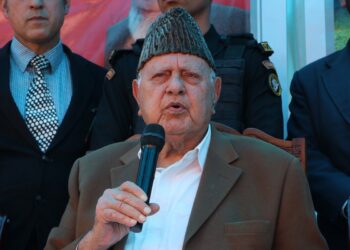
On Wednesday, Farooq Abdullah, president of the National Conference, addressed recent developments regarding ‘Operation Sindoor’ and its broader implications for global conflicts, emphasizing that wars lead to suffering rather than solutions.
At a press conference at the party headquarters, Abdullah stated, “Operation Sindoor has paid its dividends. I think there is no more question of wars. Wars do not bring a solution, they just bring misery.” He cited the ongoing crisis in Ukraine and the turmoil in the Middle East as stark examples of the devastation war inflicts.
Highlighting the dire situation with gas supplies, he noted, “Look at the situation of gas (supplies) here. It will take Qatar a year or two to restore gas supplies.” His remarks reflect growing concerns over energy security amid escalating geopolitical tensions.
When discussing the Gulf situation, Abdullah remarked that the global economy struggles under current conditions. He reassured, “Don’t panic, the world isn’t ready for war. Economic conditions of every country are already bad, and no country wants war.” He acknowledged that the Middle East, rich in oil and gas, faces enormous pressure that could lead to severe global repercussions.
Abdullah also commented on the recent assembly election results, echoing sentiments shared across the political spectrum. He stated, “How will I see, I see it like you are seeing… There was huge rigging,” referencing Mamata Banerjee’s concerns about election integrity in West Bengal.
Touching on the elections, he recognized the shifts made in various states. “Tamil Nadu is getting a new government. Congress won in Kerala, the BJP won in Assam. What else is there?” His responses reflect an awareness of the dynamic political landscape in India.
Regarding the special intensive revision (SIR) of electoral rolls, Abdullah acknowledged its impact on the elections, affirming, “There was an impact of everything.” He expressed confidence in the strength of the opposition INDIA bloc, insisting that they possess the necessary unity for effective opposition.
Addressing concerns related to the recent blasts in Punjab, he downplayed alarms, assuring reporters, “Blasts have been happening in India, and there was nothing new. You should not panic.” This response indicates a measured approach to addressing regional security challenges.
Finally, when asked about opposition criticism towards the National Conference government in Jammu and Kashmir, Abdullah maintained his stance, stating, “If they don’t, how will they survive? Let them say what they want.” His remarks underscore a confident positioning of his party amid political scrutiny.
Abdullah’s insights offer a window into the National Conference’s perspective on both domestic politics and international affairs, reinforcing his belief in dialogue over conflict.