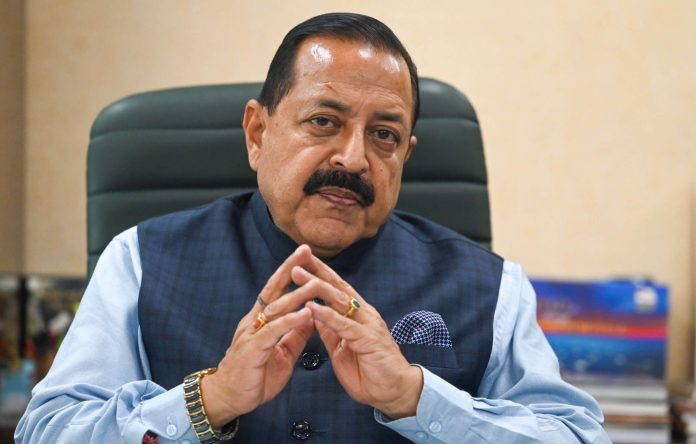

Union Minister Jitendra Singh announced a government sanction of ₹270 crore for next-generation improvements to the Centralised Public Grievance Redress and Monitoring System (CPGRAMS), further solidifying its status as the world’s largest citizen interface platform.
Upgraded Features and Technological Integration
The enhanced CPGRAMS has been equipped with:
- Multilingual support, enabling greater accessibility for citizens.
- Robust tracking systems and efficient feedback mechanisms to ensure transparency.
- Advanced capabilities of Intelligent Grievance Monitoring System (IGMS) 2.0, developed with IIT Kanpur as the knowledge partner, integrating Artificial Intelligence (AI) and Machine Learning (ML) for predictive analyses and systemic insights.
These upgrades have drastically reduced grievance redressal time to an average of 12 days, with citizen satisfaction levels reaching 44% in 2024.
Citizen-Centric Initiatives
- Over 28 lakh citizens are now registered on the platform as of November 2024.
- CPGRAMS empowers citizens to raise grievances online, making the system more accessible and efficient.
Year-End Review and Vision for the Future
In a year-end review at the Indian Institute of Public Administration, Singh emphasized the government’s dedication to:
- Integrating a “whole of government” and “whole of nation” approach as envisioned by Prime Minister Narendra Modi, aiming for improved governance and higher citizen satisfaction.
- Achieving seamless public service delivery through advanced technology and stakeholder collaboration.
Policy Insights and Reform Goals
- IGMS 2.0 provides predictive insights, enabling informed policy interventions and better governance outcomes.
- Singh underscored the importance of setting higher benchmarks for 2025, focusing on robust, efficient, and citizen-friendly grievance redressal systems.
Conclusion
The government’s commitment to technology-driven reforms continues to redefine public service delivery, ensuring that grievance management systems like CPGRAMS remain central to its citizen-first governance model.