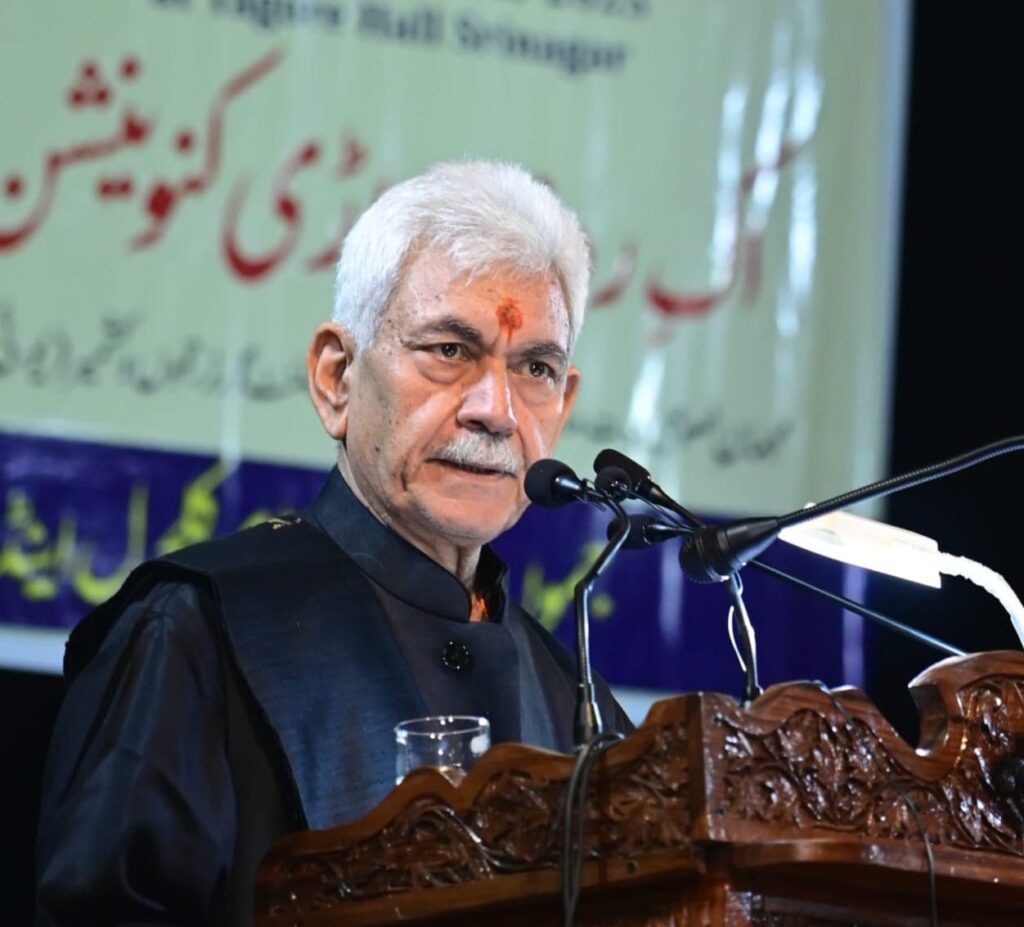
Lieutenant Governor Manoj Sinha addressed the pressing issue of terrorism in Jammu and Kashmir on Saturday, asserting that while the government and security forces play vital roles, the responsibility also lies with the local populace. Speaking at an event aimed at fostering community engagement, Sinha called on residents of the Union Territory to actively contribute to the fight against terrorism.
During the event, Sinha noted the significant decline of terrorism across India, attributing success to robust government and security measures. He stated, “Terrorism has been reduced in other parts of the country. The North-East region is largely terror-free now, and left-wing extremism is confined to just a few districts. I have confidence that we will eradicate it completely in the coming months.”
Sinha pointed to ongoing challenges in certain areas, particularly in Jammu and Kashmir as well as parts of Karnataka and Kerala. He articulated the urgent need for local communities to reject violence and extremist ideologies, highlighting terrorism as a primary barrier to development and employment. He remarked, “Security forces and the administration are fulfilling their duties, but it is critical for the people of Jammu and Kashmir to refrain from actions that may inadvertently escalate terrorism.”
In a positive shift, Sinha emphasized the improvements in the security situation within Jammu and Kashmir. He remarked, “Street violence and stone pelting have become a thing of the past. Schools, colleges, and businesses are now operating normally, similar to the rest of the nation.” He further noted, “No major terror outfit leaders remain at large, and this year has seen only one local recruitment into terror ranks.”
However, the LG did not shy away from recognizing external threats to order. He condemned Pakistan’s historical support for terrorism, stating, “While we have made measurable progress, we also contend with a neighbor always scheming against us. Rather than focusing on nation-building, Pakistan initiated aggression against India and Jammu and Kashmir immediately after partition.”
Sinha elaborated on Pakistan’s shift to proxy warfare, explaining, “Having lost four direct wars against us, they now resort to radicalizing individuals within our borders.”
He drew attention to the steep human cost of terrorism, lamenting the loss of over 40,000 lives to violence in the region. “How much longer will this cycle of violence persist? While it is the government’s duty to curtail it, it equally falls on the citizens to actively participate in its cessation,” he declared.
In a subtle warning, Sinha addressed certain narratives that echo those of terror organizations like The Resistance Front (TRF), saying, “When we hear statements resembling those from the TRF, it signals a dangerous alignment. It is imperative that our discourse remains distinct from theirs.”