The relentless hum of tomorrow’s battlefield reverberates through India’s design labs and startup hubs. At the forefront, the nation’s top air commander, Air Chief Marshal Amar Preet Singh, demands a swift transition towards achieving true self-reliance in drone development.
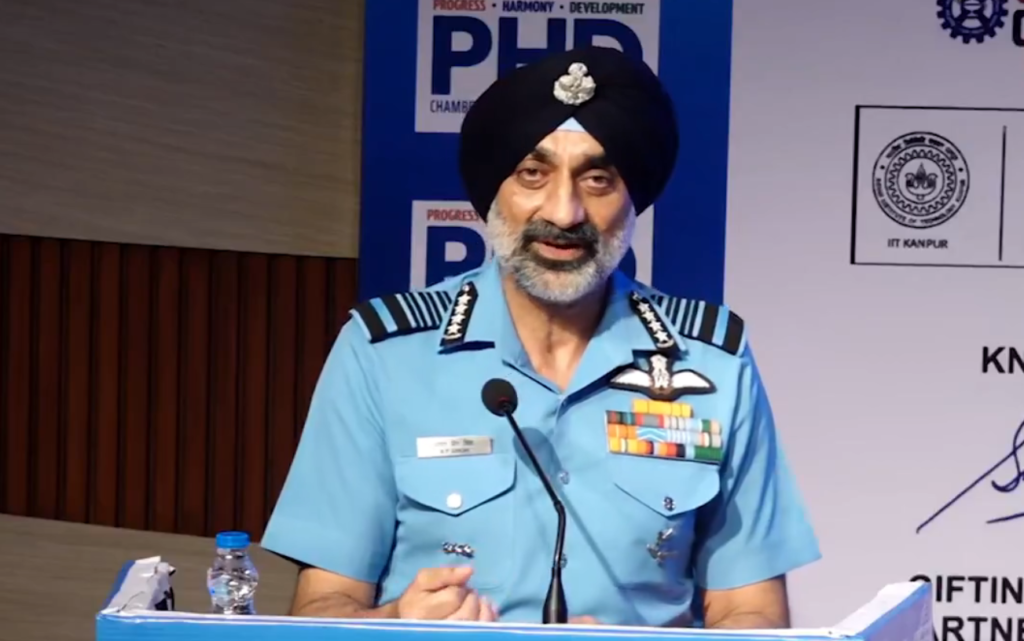
In his address at the inaugural session of the Bharat Drone & Robotics Manthan 3.0 conference, the IAF Chief outlined an ambitious framework for the Indian Air Force (IAF) to engage with domestic industry and innovators. His remarks signal a pivotal moment in India’s defence strategy, aiming to harness local talent and technology.
Air Chief Marshal Singh highlighted the critical role of unmanned systems in modern warfare, stressing that the defence sector must stay ahead of swiftly evolving technologies. “Hesitation carries a high operational cost,” he warned, underscoring the urgency for immediate action.
He further stated that the responsibility of defining clear operational needs falls to the user, which underlines the role of the newly formed Directorate of Aerospace Design (DAD). This body is positioned as a vital link to facilitate direct interaction with startups and innovators. “The problem statement has to originate from us,” he remarked, marking the importance of collaborative efforts in the drone domain.
In a bid to streamline processes, the IAF announced the launch of Dronathon 2026, scheduled for September. This initiative invites companies to demonstrate their products live, steering away from traditional and often sluggish evaluation methods. Air Chief Marshal Singh believes that real-world demonstrations will foster innovation and efficiency.
Addressing vulnerabilities linked to external supply chains, he delivered a powerful message: “Every brick should be developed in India.” This reflects a profound commitment to achieving true ‘Atmanirbhar Bharat’ (self-reliant India) in defence manufacturing.
Moreover, he cautioned against the hindrances posed by bureaucratic delays, coining the phrase, “technology delayed is technology denied.” This call to action reinforces the need for a comprehensive approach that unites academia, regulators, investors, and manufacturers in expediting the transition of solutions from the lab to operational readiness.
While drones serve to augment manned platforms rather than replace them, the proactive outreach strategy by IAF indicates a shift towards turning operational challenges into collaborative solutions. The focus is not just on products, but on building a robust ecosystem that promotes indigenous aerospace entrepreneurship.
“If we keep doing what we are doing, we will get the same results,” cautioned Air Chief Marshal Singh, advocating for innovative approaches to secure the future of India’s defence capabilities. The clarion call to action resonates throughout the defence community as the IAF embarks on this transformative journey.