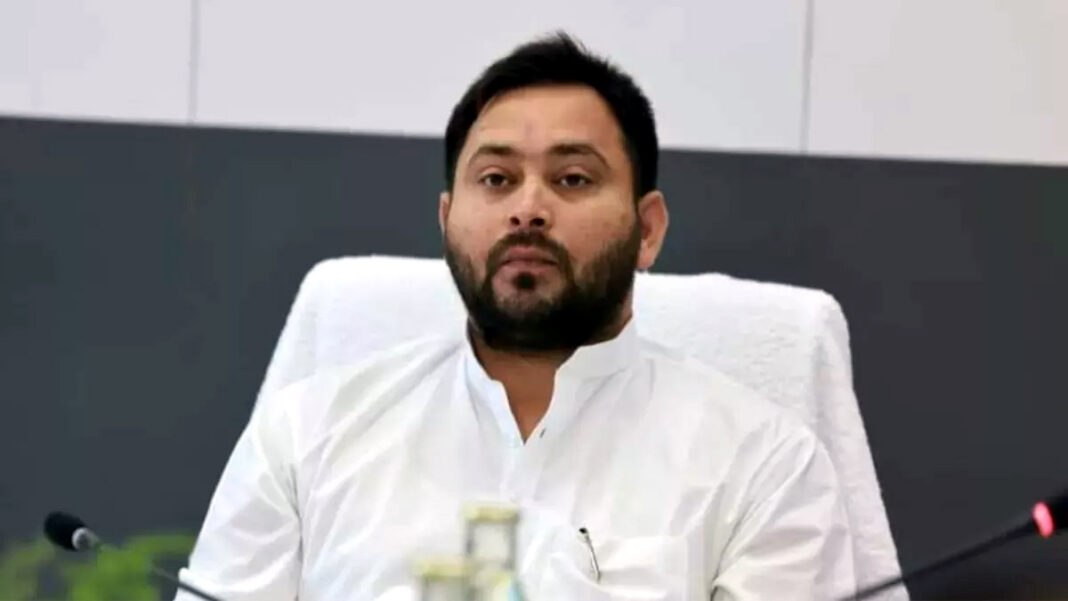

The Delhi High Court on Tuesday sought a response from the Central Bureau of Investigation (CBI) on a plea filed by RJD leader Tejashwi Prasad Yadav challenging the trial court order framing charges against him in the alleged IRCTC scam case.
Justice Swarana Kanta Sharma issued notice to the CBI on Tejashwi’s petition as well as his application seeking a stay on the proceedings. The matter has been listed for further hearing on January 14, the same day when a similar plea filed by his father and former Union Railway Minister Lalu Prasad Yadav will also be taken up.
On October 13, 2025, the trial court framed charges against Lalu Prasad Yadav, his wife and former Bihar Chief Minister Rabri Devi, son Tejashwi Prasad Yadav, and 11 other accused. The charges include offences of cheating and criminal conspiracy under the Indian Penal Code (IPC), along with provisions of the Prevention of Corruption (PC) Act.
Both Tejashwi and Lalu have approached the High Court challenging the trial court’s order, which arises out of alleged irregularities in the grant of operational contracts of two Indian Railway Catering and Tourism Corporation (IRCTC) hotels to a private firm.
Apart from Lalu Prasad, charges under Section 13(2) read with Section 13(1)(d)(ii) and (iii) of the PC Act were framed against Pradeep Kumar Goel, Rakesh Saksena, Bhupendra Kumar Agarwal, Rakesh Kumar Gogia and Vinod Kumar Asthana. These provisions deal with criminal misconduct by a public servant and abuse of official position to obtain undue advantage.
The trial court also directed that charges under IPC Section 420 (cheating) be framed against Lalu Prasad, Rabri Devi, Tejashwi Prasad Yadav, M/s LARA Projects LLP, Vijay Kochhar, Vinay Kochhar, Sarla Gupta and Prem Chand Gupta.
Further, a common charge of criminal conspiracy under Section 120B IPC was ordered to be framed against all 14 accused, read with Section 420 IPC and the relevant provisions of the PC Act.
Under the Prevention of Corruption Act, the maximum punishment prescribed is 10 years of imprisonment, while the offence of cheating under the IPC carries a maximum sentence of seven years.