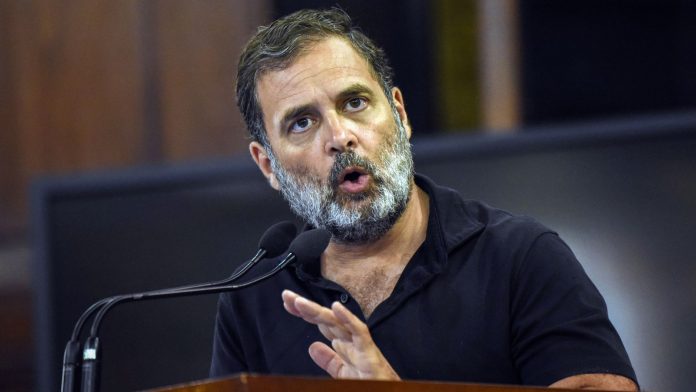
In a heated political exchange, the Bharatiya Janata Party (BJP) has accused Congress leader Rahul Gandhi of systematically attempting to weaken democracy in India. This assertion follows Gandhi’s allegations regarding the deletion of over 6,000 voters’ names in Aland Assembly, Karnataka, and claims against Chief Election Commissioner Gyanesh Kumar.
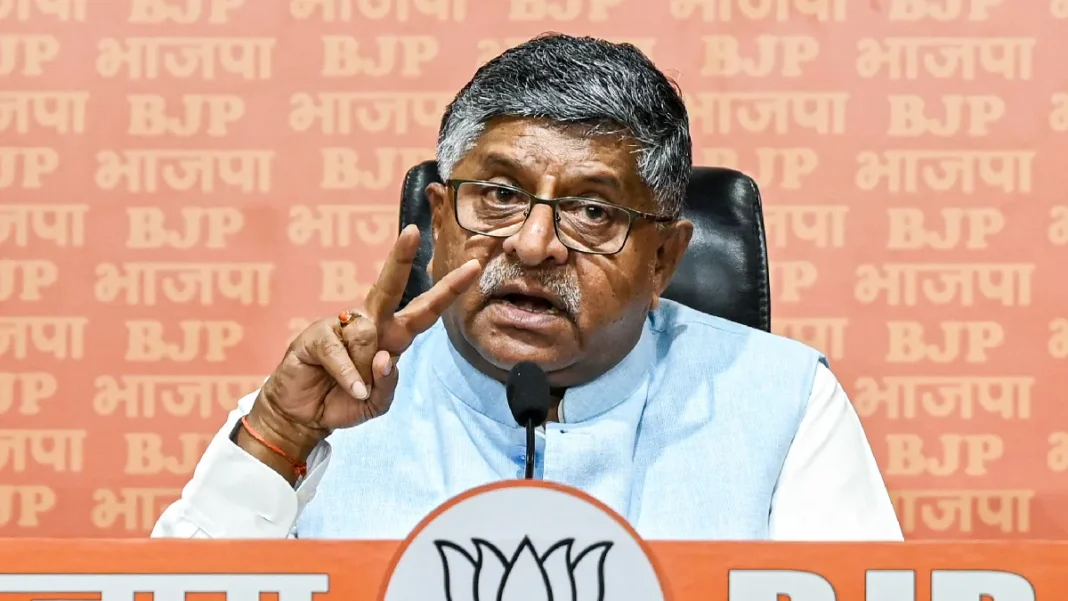
On Friday, BJP leaders, including former Union Minister Ravi Shankar Prasad, responded to Gandhi’s allegations, emphasizing that he is spreading misinformation because the public no longer supports him or his party.
What is the Controversy?
Rahul Gandhi’s claim that 6,000 voters’ names were deleted raises significant concerns about electoral transparency. He accused the Chief Election Commissioner of covering up these alleged irregularities, prompting a robust rebuttal from the BJP.
Prasad criticized Gandhi’s assertions, suggesting they were unfounded and politically motivated. “Rahul Gandhi is systematically trying to weaken India’s democracy. Why? Because the public doesn’t vote for him,” he stated during a press briefing.
Accusations of Misinformation
Prasad pointed out that Gandhi’s allegations were especially ironic, considering the Congress party had emerged victorious in the 2023 Karnataka elections, where these irregularities supposedly occurred. “The entire machinery was at the Congress government’s disposal, yet they are trying to blame others,” he explained.
Moreover, Prasad noted that Gyanesh Kumar was not the Chief Election Commissioner during the time of the last Karnataka Assembly elections, casting further doubt on Gandhi’s claims. He emphasized, “How can you blame someone who was not even in office during that period?”
Reactions from the Political Arena
The exchange of barbs continued as Prasad addressed Gandhi’s public statements about previous elections. “He is calling the 2014 and 2019 elections fraudulent. All of them have won by rigging the votes,” Prasad asserted, highlighting the perceived double standards in Gandhi’s criticisms.
Amid escalating tensions, the BJP has urged Gandhi to cease what they describe as “abusing the democratic choice of the voters of India.” The stark accusations bring to light the ongoing struggle between the BJP and Congress for electoral dominance.
The Bigger Picture: Democracy at Stake?
Political analysts are keeping a close watch on how these exchanges might affect public opinion going into future elections. The BJP’s stance indicates a larger strategy to frame Gandhi’s rhetoric as an attack on the very democratic principles they claim to uphold.
“The fight for India’s democracy is vital, and we must question those who seek to undermine it for political gain,” said a political analyst. This situation may serve as a defining moment for how each party engages with voters as the country approaches the 2024 elections.
As the political climate heats up, the focus remains squarely on trust in democracy and electoral integrity. With accusations flowing from both sides, voters are left to navigate a complex landscape of claims, counterclaims, and the intricacies of political motives.
In conclusion, the BJP’s response to Rahul Gandhi’s allegations of electoral fraud in Karnataka reveals not just a divergence in political strategy but raises broader questions about public integrity, democracy, and the future of political discourse in India.