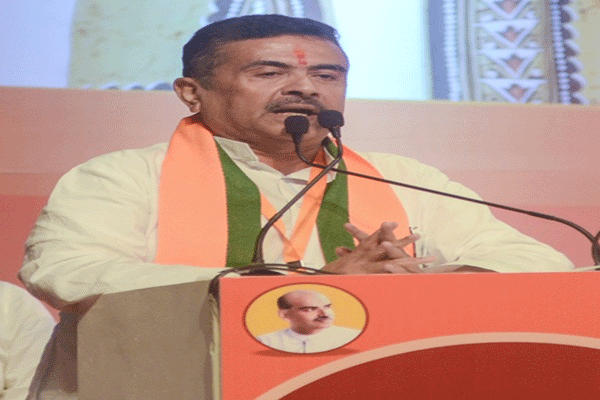

West Bengal’s chief minister-elect, Suvendu Adhikari, marked a momentous occasion on Saturday, announcing the dawn of ‘Sonar Bangla’. He emphasized that this day signifies a new era of peace and prosperity for the state under a ‘double-engine’ administration, as the Bharatiya Janata Party (BJP) prepares to govern for the first time since Independence.
Adhikari addressed the media ahead of Prime Minister Narendra Modi’s arrival in Kolkata for the crucial oath-taking ceremony at Brigade Parade Ground. He warmly welcomed the Prime Minister, highlighting the historic significance of the event.
“A historic dawn for West Bengal indeed. It is a moment of profound pride and jubilation to welcome visionary Leader PM Narendra Modi Ji to the City of Joy,” Adhikari stated. His remarks reflected a deep sense of achievement as the BJP crew prepares to initiate transformative governance.
“Today, as we witness the swearing-in ceremony of the first-ever BJP government in West Bengal since Independence,” Adhikari remarked, “we fulfil the dreams of our founding fathers.” The inauguration represents not just political change but a fulfillment of aspirations held high by numerous leaders through the years.
In a show of solidarity, the Chief Minister-elect expressed appreciation for the judiciary of West Bengal, crediting it with enabling a conducive atmosphere for democracy. “Our government looks forward to enhancing the peace and safety of all citizens,” Adhikari added.
With the BJP’s manifesto promising a focus on development, welfare schemes, and job creation, observers anticipate significant policy shifts. The party aims to leverage its platform to transform West Bengal into a leading state within India’s economic framework.
Political analysts regard this shift as a response to growing discontent among the populace over prevailing issues such as unemployment and health care. The people of Bengal have shown enthusiasm as evidenced by the high voter turnout during the recent elections.
The positioning of a ‘double-engine’ government, referring to the BJP’s presence both at the Centre and within the state, aims to expedite infrastructure projects, improve public services, and drive economic growth.
As the focus shifts toward development, residents in the state eagerly anticipate the beginning of a fresh chapter filled with opportunities. Between robust governance and progressive policy-making, Adhikari’s administration promises to bridge the gaps left by the previous government.
This watershed moment serves as a poignant reminder that political tides can change course, ushering in what may become known as a new chapter of governance in West Bengal. With the citizens’ hopes resting on the new administration, the coming months will reveal the impact of BJP’s policies on the daily lives of Bengalis.