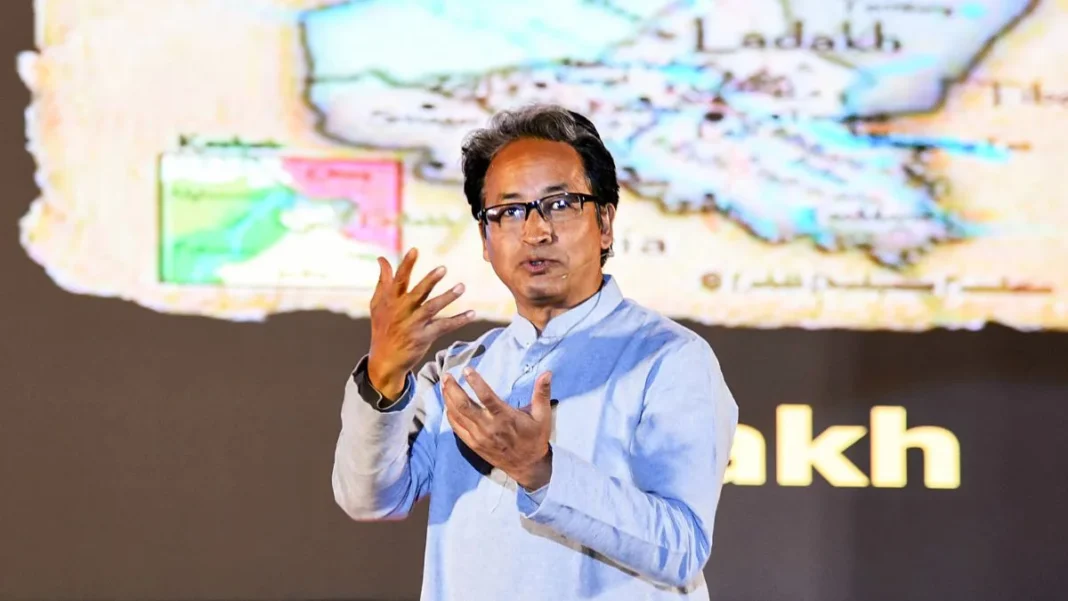

Climate activist Sonam Wangchuk has faced detention under the National Security Act (NSA) and transferred to Jodhpur Jail, following his arrest on Friday by the Ladakh administration. This move has drawn significant backlash from netizens, who have labeled the day as a “black day” for Ladakh.
Authorities announced Wangchuk’s transfer in a statement issued at midnight. This action came just two days after widespread protests erupted in Leh, where locals demanded statehood and the implementation of the Sixth Schedule, a measure aimed at safeguarding the region’s unique demographic and cultural identity.
The protests turned violent, resulting in four fatalities and approximately 90 injuries due to police action. People across social media expressed outrage, holding local officials accountable for the tragic outcomes of the clashes.
Wangchuk initiated a 35-day hunger strike on September 10 while advocating for statehood and environmental protection in Ladakh. However, he called off his fast on September 24 amid escalating violence, highlighting the urgency of his cause.
Online commentators have voiced concerns about the implications of Wangchuk’s detention under the NSA. Many have criticized the administration’s approach, linking it to a broader narrative of suppression regarding regional demands.
In the official statement, the Ladakh administration justified the arrest, stating: “Sonam Wangchuk has consistently engaged in activities detrimental to the state’s security and public order.”
The administration further elaborated that Wangchuk’s actions, including provocative speeches referencing the Arab Spring, contributed to the civil unrest. The statement urged the need for maintaining peace in Leh, emphasizing the necessity of Wangchuk’s transfer to ensure public order.
“In this backdrop, the administration, based on specific inputs, took a considered decision to detain Sonam Wangchuk under the National Security Act (NSA) and move him to Jodhpur,” the press release stated, underscoring the perceived threat his actions posed to regional stability.
The local population and activist groups projected a unified front against this decision, asserting that the government must engage with community leaders rather than resort to punitive measures. This episode has sparked discussions on how national laws impact local voices, particularly amid rising demands for autonomy and protection of indigenous rights.
Leh residents remain vigilant, insisting that Wangchuk’s activism aligns closely with the aspirations of many in Ladakh. His work, centered on sustainable development, resonates deeply with the local community, who fear that their voices will remain unheard in a more extensive national framework.
As tensions continue, leaders across Ladakh are calling for dialogue as a means to prevent further escalation of violence. Many hope that resolving the issues concerning statehood and local governance will prioritize the peaceful coexistence of the region’s diverse populace.
Wangchuk’s detention under the NSA has not only raised questions regarding his personal freedom but also about the fundamental rights of the people of Ladakh. His supporters continue to mobilize, urging for a reconsideration of his detention and a strong commitment from the government towards meaningful negotiations. The ongoing discourse around Wangchuk’s welfare may not only shape his future but also redefine the landscape of activism in Ladakh.