
An offshore earthquake with a preliminary magnitude of 7.6 struck off the coast of Davao Oriental in the Philippines on Friday morning, triggering alerts of a potential hazardous tsunami in nearby coastal areas. The seismic event occurred at approximately 8:45 AM local time.
According to the Philippine Institute of Volcanology and Seismology (PHIVOLCS), the earthquake resulted from a shallow fault movement at a depth of 10 kilometres, and was centred about 62 kilometres southeast of Manay town. The institute has warned that residents should prepare for possible damages and strong aftershocks following the initial tremor.
The Pacific Tsunami Warning Center, based in Honolulu, reported that hazardous tsunami waves could occur within 300 kilometres of the epicentre. The centre forecasts that some Philippine coasts could witness waves climbing up to 3 metres above normal tide levels. Smaller tsunami waves may also affect regions in Indonesia and Palau, raising safety concerns across the region.
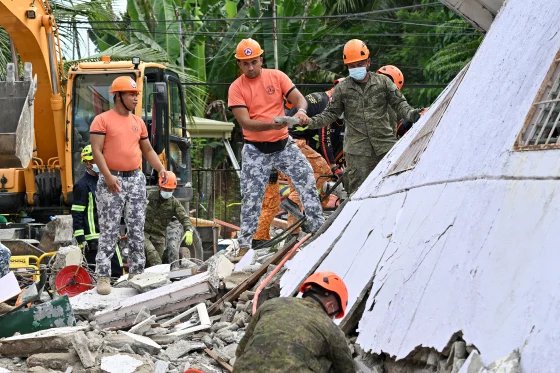
The Philippines continues to grapple with the aftermath of a magnitude 6.9 earthquake that struck on September 30, claiming at least 74 lives and displacing thousands in the central province of Cebu, particularly in Bogo city and surrounding areas.
Known as one of the world’s most disaster-prone countries, the Philippines sits on the Pacific “Ring of Fire”, a region renowned for its seismic activity. The archipelago faces additional challenges from around 20 typhoons and storms each year, emphasizing the importance of disaster preparedness and response for both governmental agencies and volunteer organizations.
In light of the recent threat, authorities have urged coastal residents to remain vigilant and adhere to evacuation protocols until the tsunami danger fully subsides. The National Disaster Risk Reduction and Management Council (NDRRMC) is actively monitoring the situation and providing information to ensure the public’s safety.